Let’s Talk Protein.
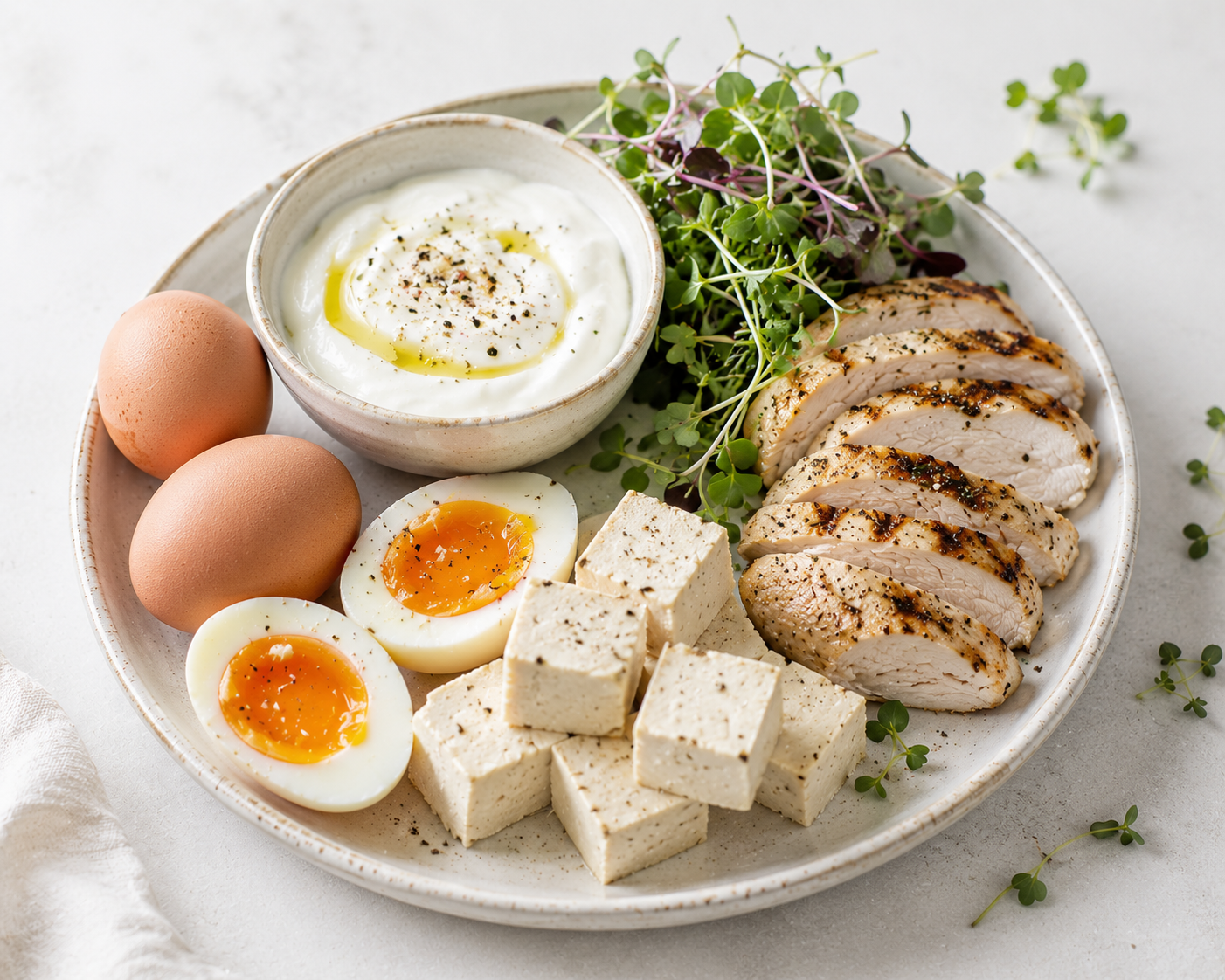
For menopausal women, protein is the single most important nutrient for preserving and rebuilding muscle, especially when combined with resistance training.
Why Muscle Loss Accelerates During Menopause
Beginning in your 40s and accelerating during menopause:
Estrogen declines, reducing muscle protein synthesis.
Muscle becomes less responsive to protein (called anabolic resistance).
Recovery from exercise is slower.
Fat gain often increases while muscle mass decreases.
Women can lose approximately 1–2% of muscle mass per year if they are inactive.
The good news: muscle can absolutely be rebuilt after menopause, and studies show women in their 50s, 60s, 70s, and beyond can gain significant strength and muscle with adequate protein and resistance training.
How Much Protein?
Minimum for Health
Minimum 0.8 grams of protein per pound of body weight (a 125lb. woman needs at least 100 grams per day)
This prevents deficiency but is not enough for building muscle. For muscle building, at least 1 gram of protein per pound of body weight. Higher amounts are needed when training intensity is higher and bigger muscle gains are desired.
Rule of thumb for Menopausal women who are active and participate in some form of resistance training: Aim to eat at least .8-1 gram of protein per pound of body weight.
For women who are severely low on protein and weigh more than 150 pounds, aim to eat at least 55% of body weight in grams and work up to the minimum 80%.
Optimal for Menopausal Women
100–140 grams daily is an excellent target.
Protein Timing Matters
Unlike younger adults, menopausal women benefit from spreading protein throughout the day.
Aim for:
Breakfast: 25–35 g
Lunch: 25–35 g
Dinner: 25–35 g
Snack(s): 10–20 g
Many women eat:
10 g breakfast
15 g lunch
50 g dinner
This is less effective than distributing protein evenly.
The Leucine Threshold
Leucine is the amino acid that signals muscle growth.
Menopausal women generally need:
2.5–3 grams leucine per meal
This usually comes from:
4–5 oz chicken
5 oz turkey
5 oz fish
3 eggs plus Greek yogurt
Whey protein shake
Aim for at least 25–35 g high-quality protein per meal.
Best Protein Sources
Animal Proteins (Highest Quality)
Chicken Breast
26–30 g protein per 4 oz
Turkey Breast
26–30 g protein per 4 oz
Salmon
25–30 g protein per serving
Also provides omega-3 fats
Tuna
25–30 g protein per serving
Eggs
6–7 g each
Greek Yogurt
15–20 g per serving
Cottage Cheese
20–25 g per cup
Plant Proteins
Excellent choices include:
Tofu
Tempeh
Edamame
Lentils (a carbohydrate that happens to be higher in protein)
Chickpeas (a carbohydrate that happens to be higher in protein)
Hemp Seeds (high in fat but a good source of fat)
Sprouts and Microgreens
Plant proteins often require slightly larger servings because they contain less leucine than animal proteins.
Whey vs Plant Protein
Whey Protein (Grass Fed only)
Fast digestion
Rich in leucine
Most effective for muscle growth
Can cause bloating and gas (inflammation and digestive intolerance)
Plant Protein
Pea, soy, hemp blends work well
Often need a slightly larger serving
Great option if dairy-free
Can be deficient in some Amino Acids
Aim for:
25–30 g protein per shake
At least 2.5 g leucine per serving
Protein and Weight Loss
A higher-protein diet helps by:
Preserving muscle while losing fat
Increasing satiety
Reducing cravings
Supporting blood sugar stability
Increasing calorie burn through digestion
Women who lose weight without enough protein often lose both fat and muscle.
Resistance Training Is Essential
Protein alone won't build significant muscle.
The ideal combination is:
Strength training 2–4 times weekly
Progressive overload (gradually increasing challenge)
100–140 g protein daily
Adequate sleep
Consistent calorie intake
This combination can:
Reverse age-related muscle loss
Improve metabolism
Increase bone strength
Improve insulin sensitivity
Improve balance and independence later in life
Practical Daily Goal for a 55–65 Year-Old Woman
A simple target:
Protein: 25–35 g at each meal
Total daily protein: 100–140 g
Resistance training: 2–4 days weekly
Include protein within 1–2 hours after workouts
Simple takeaway:
👉 For menopausal women, aiming for 100–140 grams of protein daily, spread evenly across meals and combined with regular strength training, is one of the most effective ways to rebuild muscle, improve body composition, and counteract age-related muscle loss.
Note: This article is meant to offer general guidelines on the subject matter. Always consult with your doctor or health care provider if you are unsure about what is right for you or if need a deeper level of support.
